CSAAPT Fall 2025 Semi-Virtual Meeting

America/New_York
VCU STEM Building

VCU STEM Building

817 W Franklin St, Richmond, VA 23220
Description


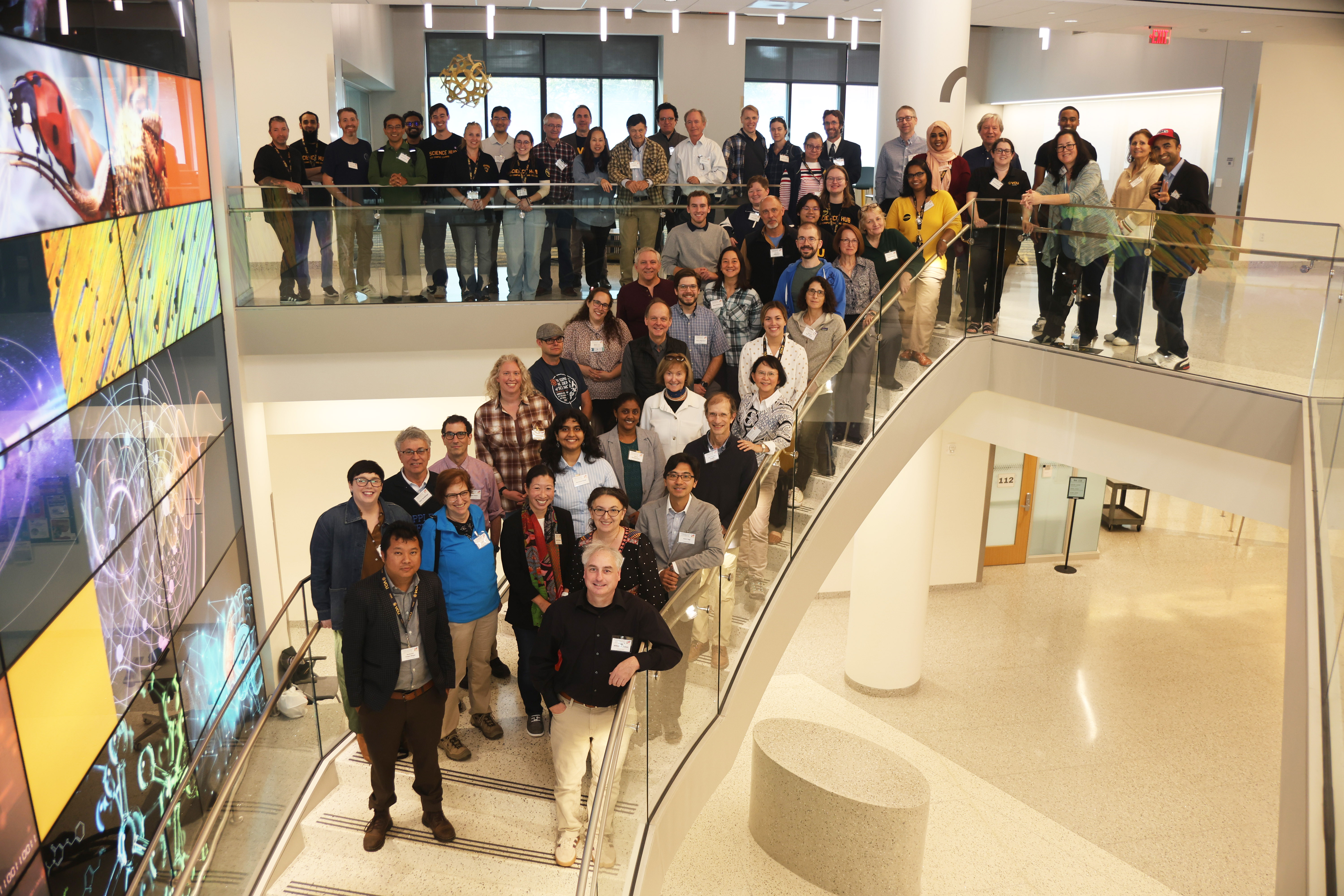
Group photo on the STEM Building stairs.


This meeting is hosted by the Department of Physics at Virginia Commonwealth University

with additional funding from


Overview:

The Fall 2025 Meeting of the Chesapeake Section of the American Association of Physics Teachers (CSAAPT) will be held on Saturday, October 11, 2025 at the Monroe Park Campus of Virginia Commonwealth University in Richmond, VA.

Virginia Commonwealth University is a major, urban public research university with national and international rankings in sponsored research. Located in downtown Richmond, Virginia, VCU enrolls more than 28,000 students in more than 200 degree and certificate programs in the arts, sciences and humanities across VCU’s 12 schools and three colleges.

The VCU Department of Physics has a robust research program that provides opportunities for our undergraduates to explore cutting edge physics and develop skills that prepare them for work in scientific research and industry. Our academic program includes both a traditional physics education and a special track for pre-medical students. 

No membership required!             
You do not have to be an AAPT or CSAAPT member to attend. We welcome participation of all physics/science teachers and students in the region (DC, DE, MD, VA and neighboring states) as well as anyone interested in physics education, or physics in general.

The semiannual CSAAPT meetings are a great forum to exchange ideas on novel teaching techniques and economical physics demonstrations, and to meet a fascinating cohort of physics education enthusiasts.

This meeting is semi-virtual. The in-person meeting venue will be at Virginia Commonwealth University. Further details can be found on the Meeting Location page. The Meeting will be broadcast on Zoom so that people from afar (both presenters and attendees) can join in.  

Lodging Support!                            
We have limited funds to provide up to $360 in lodging support to high school physics teachers. Please see the Travel & Lodging Info page for more details.


Program:

  • Details of the program can be found on the Timetable page.
  • We will also have a Book Swap (see below for details) so please bring a physics book that you would like to exchange for another.


Invited Speakers:

Please see the Invited Speakers page for the titles and abstracts of the talks and the speakers' bios.
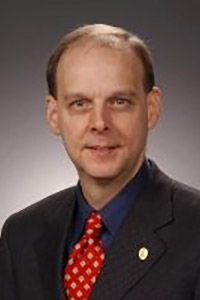
Dr. Carl J. Williams

CJW Quantum Consulting LLC, CEO

Ms. Elissa Levy

Thomas Jefferson High School for
Science and Technology, VA


Contributed Talks and Demos:

We solicit contributions within the following parameters:

  • 15-minute talk or demo (12 minute talk + 3-minute Q&A, both in-person and via Zoom)
                      
    Talk topic/demo can be anything pertaining to physics teaching

  • To submit the title and abstract of your talk, please register first and then click on Call for Abstracts in the menu

  • The deadline to submit your title and abstract for talks and demos is midnight of Sunday, September 14, 2025.   
     
  • We plan to have a demo share-a-thon in the afternoon (no demo presentations in the morning). 
     
  • Contributors of talks/demos will be issued certificates of presentation. These will be emailed to you after the Meeting.


Book Swap:

  • If you have any physics related books (including textbooks) that you no longer need, please bring them to the meeting (5 books max). 

  • In exchange, you can take home books others have brought in (up to the number of books you brought in plus one extra).

  • If the books you brought remain untaken at the end of the meeting, please take them back with you.


Registration:

  • In-person attendance:
     
    • Please use the in-person attendance registration form on the Registration page,  

    • The deadline to register for in-person attendance is midnight of Sunday, September 21, 2025. 

    • In-person attendees are requested the following registration fees to cover administrative and other costs:                                  
       
        • Instructors/faculty of 2-year and 4-year colleges/universities, employees of institutions/organizations/companies : $35
        • K-12 Instructors, Retirees, Students, Guests : $25
        • 1st-time in-person attendees : $15                                  
           
    • You will earn a CSAAPT membership for the academic year 2025-2026 once the above registration fee is paid.

    • The registration fee is NOT payable upon registration.  A link for you to directly pay the registration fee online will be emailed to you after the registration deadline.  

       
  • Remote Attendance:                                  
     
    • Please use the Zoom attendance registration form on the Registration page.                  
       
    • The deadline to register for remote attendance is midnight of Friday, October 10, 2025. 

    • There is NO registration fee for remote attendees.

    • Please note that the Zoom link for the meeting will not be made public and will only be emailed to registrants.  The Zoom link will be sent to you in a Zoom or calendar invite, so please pay attention to what you are receiving in your email.               
       
    • Once on Zoom, please change your Zoom name to your full name followed by your affiliation in parentheses, e.g. Jane Doe (Richmond High School). This is so that we can identify your presence for the purpose of issuing your certificates of attendance.                               

       
  • Certificate of Attendance/Presentation:                                  
     
    • Certificates of attendance/presentation will be issued to both in-person and virtual attendees/presenters.                                  
       
    • If you need a certificate of attendance and/or presentation, please register your name exactly as it should appear on your certificate(s).  No nicknames or pseudonyms, please.                      
       
    • A detailed program in pdf can be generated by clicking on the "PDF" button at the top of the "Timetable" page (once the timetable is available).


Important Deadlines:

  • Application for Lodging Support: Sunday, August 31, 2025
  • Hotel room-block cutoff: Friday, September 12, 2025
  • Submission of talk and demo abstracts: Sunday, September 14, 2025
  • Registration for in-person attendance: Sunday, September 21, 2025
  • Registration for virtual attendance: Friday, October 10, 2025


Organizational Committee:

Carissa Capuano (Chair, Virginia Commonwealth University, VA)
Samanthi Wickramarachchi (Virginia Commonwealth University, VA)
Kent Yagi (CSAAPT President, University of Virginia, VA)
Jency Sundararajan (CSAAPT Vice President, University of Virginia, VA)
Alina Cichocki (St. Christopher's School, VA)
James Freericks (Georgetown University, DC)
Muge Karagoz (CSAAPT, MD)
Elissa Levy (Thomas Jefferson High School for Science and Technology, VA)
Kris Lui (AAPT-OPTYCs, MD)
Carl Mungan (USNA, MD)
John Ochab (Reynolds Community College, VA)
Renee Reisenweaver (Randolph-Macon College, VA)
Jason Sterlace (James Madison University, VA)
Stewart Williamson (Collegiate School, VA)
Tatsu Takeuchi (Virginia Tech, VA)

Participants
  • Aarshiya Singh
  • Adelline Oliveira
  • Albert Pape
  • Alejandro Satz
  • Ales Psaker
  • Alfredo Sánchez
  • Alina Cichocki
  • Alison Gaylord
  • Alma Robinson
  • Andres Akamine
  • Carissa Capuano
  • Carl Mungan
  • Carl Williams
  • Darcy Mays
  • Edmond Dukes
  • Eileen Malick
  • Elissa Levy
  • Elizabeth Kelley
  • Francesca Viale
  • Gabriel Bohannon
  • Henry Hilgendorf
  • James Stidham
  • Jan Fiala
  • Jason Sterlace
  • Jeff Steele
  • Jeffrey Urbach
  • John Ochab
  • John Skrobiszewski
  • Joseph Reiner
  • Joshua Lehman
  • Karl Gron
  • Kent Yagi
  • Laura Akesson
  • Leanne Doughty
  • Lilian Clairmont
  • Marilyn F. Bishop
  • Maxim Bychkov
  • Michael Mailey
  • Muge Karagoz
  • Mukesh Chhajer
  • Narbe Kalantarians
  • Nishchal Thapa Magar
  • Omnia Elhussein
  • Phuc Tran
  • Qi Lu
  • Ramani Kharidehal
  • Renee Reisenweaver
  • Richard Joh
  • Richard Lindgren
  • Richard Terwilliger
  • Robert Gowdy
  • Robert Group
  • Roberto Salgado
  • Robin Curtis
  • Samantha Spytek
  • Samanthi Wickramarachchi
  • Shaima Bayiz Mawlood
  • Shruti Shrestha
  • Sithy Maharoof
  • Stew Williamson
  • Susan Booth
  • Tatsu Takeuchi
  • William A. Tobias
  • William Henderson
  • Yelena Prok
  • +28
    • 8:00 AM 8:30 AM
      Registration and Breakfast 30m
    • 8:30 AM 8:45 AM
      216: Opening Remark
      Convener: Joseph Reiner (Virginia Commonwealth University)
    • 8:45 AM 9:45 AM
      216: Plenary Talk 1
      Convener: Carissa Capuano (Virginia Commonwealth University)
      • 8:45 AM
        From Ideal to Real: Teaching Physics for an Imperfect World 1h

        No physics classroom is an isolated system. Our students bring their whole selves—their emotions, dreams, and life history—into our learning spaces, and they carry their classroom experiences out into the world. In this talk, we'll explore frameworks for helping students connect the idealized content of the physics classroom with the complexities of the real world. By doing so, we can empower students to become more critical thinkers, preparing them to navigate a world that is anything but frictionless. We'll examine the history of physics and how it has shaped our modern curriculum, discuss the structures of power and privilege that influence who participates in physics, and explore pedagogical approaches that foster a more inclusive and relevant learning environment. Join us for specific and immediately usable strategies, as well as a roadmap for continuing this conversation—because there is no simple solution to teaching physics in today's complex world.

        Speaker: Elissa Levy (Thomas Jefferson High School for Science and Technology)
    • 9:45 AM 10:00 AM
      Break 15m
    • 10:00 AM 11:00 AM
      110: Parallel 1
      Convener: Stew Williamson (Collegiate School US Science Chair)
      • 10:00 AM
        Addressing Math Readiness in Physics: Teaching Geometrical Optics Before Kinematics 15m

        Many students enter physics with limited math readiness, yet they must learn scientific concepts while developing the mathematical tools to apply them. This creates a tension: students need science to drive math learning, but math gaps can hinder progress in physics. To address this challenge, a revised instructional sequence was piloted in which waves were introduced before kinematics. This allowed students to complete the NGSS PS4 standards while engaging in conceptually rich investigations that did not immediately require advanced mathematical skills. Using the Active Learning Guide from Chapter 22 of College Physics, students explored wave phenomena, building a foundation in physics while reinforcing Algebra II skills in their concurrent math courses. This sequencing provided time for students to gain confidence in mathematics before encountering more quantitatively demanding physics topics. The presentation will examine the challenges, benefits, and outcomes of this approach, with attention to student readiness, pacing, and rigor.

        Speaker: Andres Akamine (Boyd J. Michael, III Technical High)
      • 10:15 AM
        Inspiring Future Aviators: Educational Initiatives by the Virginia Department of Aviation 15m

        "Planting the Seed" is one way that the Virginia Department of Aviation describes the objective of their educational programs. Initiatives include the ICON A5 Introduction to Flight Program, which brings a light sport amphibious aircraft to public events; the Virginia Aviation Teacher’s Grant, offering up to $500 for K–12 educators to develop aviation-themed lessons; and two scholarships supporting pilot training and non-engineering aviation careers. Creative engagement is also encouraged through statewide art and photo contests. Collectively, these programs spark curiosity and support long-term career development in aviation.

        Speaker: Anthony Sotelo (Virginia Department of Aviation)
      • 10:30 AM
        Student Opportunities with the Virginia Academy Science 15m

        I will review the opportunities for research awards, grants, scholarships, and presentations through the Virginia Academy of Science (VAS) for undergraduate students and the Virginia Junior Academy of Science for high school students. VAS has been actively promoting science in Virginia for over 100 years.

        Speaker: Craig Group (Virginia)
      • 10:45 AM
        The Benefits of the Virginia Junior Academy of Science for Secondary Students, with an Emphasis on Physics 15m

        The Virginia Junior Academy of Science (VJAS) provides a valuable platform for secondary students in Virginia to engage in scientific research, including specialized opportunities for those interested in Physics. By participating in hands-on projects and presenting their work, students—particularly Physics enthusiasts—cultivate scientific curiosity, analytical reasoning, and problem-solving abilities essential for both academic and career success in Physics and related disciplines. The VJAS supports the development of critical thinking and communication skills, encourages exploration of fundamental concepts and modern advancements in Physics, and connects students with mentors and peers who share their interest in the subject. In addition, the program offers recognition, scholarships, and networking opportunities specifically relevant to Physics, while promoting diversity and inclusion in STEM. Through these experiences, Physics students gain confidence, prepare for future challenges, and contribute to a vibrant scientific community in Virginia.

        Speaker: Robin Curtis (VJAS)
    • 10:00 AM 11:00 AM
      112: Parallel 1
      Convener: Alina Cichocki (Saint Christopher's School - CSAAPT)
      • 10:00 AM
        Parallel LR Circuits 15m

        Some variations of connecting two inductors in parallel with a battery (along with some current-limiting resistors) will be discussed [1-2]. A switch is used to power the circuit up or down. Interesting aspects of the behavior of the circuits include a response that cannot described by a single exponential, and a contradiction with Kirchhoff's laws if all circuit elements are assumed to be ideal.
        [1] C.E. Mungan, "Double-exponential LR circuit," Physics Teacher 43, 519-523 (November 2005).
        [2] C.E. Mungan and J.S. Helton, "A surprising two-inductor circuit," Physics Education 59, 023005:1-4 (March 2024).

        Speaker: Carl Mungan (U.S. Naval Academy)
      • 10:15 AM
        A computer program to draw electric field lines for n point-charges 15m

        Even though we teach electric field lines, most of us probably can’t draw the electric field lines when there are more than two point-charges. I will present a program to draw electric field lines for an arbitrary arrangement of up to 4 point-charges.

        Speaker: Phuc Tran (Brightpoint Community College)
      • 10:30 AM
        Rolling Downhill and Uphill : The Physics of the "Let it go" and "Defying gravity" demos 15m

        At the past few meetings, we presented demos we called "Let it go" and "Defying Gravity." "Let it go" was a demo involving rolling objects downhill. It showed that the speed of the objects at the bottom of the hill depended on the object's moment of inertia. "Defying gravity" was a demo which involved a pair of rails arranged in a V-shape with the open end raised above the closed end. When an object shaped like two cones glued to each other is placed on the rails, it rolls uphill due to its center-of-mass actually being lowered as the object rolled. In this talk, we will derive the accelerations of the objects in these demos.

        Speaker: Tatsu Takeuchi (Virginia Tech)
      • 10:45 AM
        A Sample of Fun Student Exercises 15m

        This presentation will reproduce and discuss a few laboratory exercises that are easy for the students to complete in one class period and offer instant feedback to the student whether they have completed the exercise correctly. These experiments focus on reinforcing major physics concepts while reducing the amount of teacher grading.

        Speaker: Richard Terwilliger (Retired Physics/Earth Science Teacher - Suffern Central School District, Suffern, NY)
    • 10:00 AM 11:00 AM
      216: Parallel 1
      Convener: John Ochab (Reynolds Community College)
      • 10:00 AM
        Helping students become "physics people" with the STEP UP Everyday Actions 15m

        We want all of our students to see themselves as “physics people.” Helping students build their physics identity is key to deepening both their engagement in our classrooms and their interest in pursuing a physics-related career. In this session, I will share the STEP UP Everyday Actions that you can do to help foster your students’ physics identity.

        Speaker: Alma Robinson
      • 10:15 AM
        What makes a good Physics mentor for women in Physics? 15m

        Who in Physics has served as a mentor to you? What did you find valuable? In what ways do you wish you had additional or different mentorship? We asked these questions to 32 undergraduate women in physics from across the U.S. as part of a larger research study examining the experiences of undergraduate women in physics. Our analysis is ongoing, yet we already note mentorship's vital role in physics identity formation and persistence, or lack thereof; from both being mentored and mentoring others. We hope these women's stories will inspire and inform mentorship opportunities and programs.

        Speaker: Laura Akesson (George Mason University)
      • 10:30 AM
        Physics Clubs and Undergraduate Women In Physics: How clubs can foster identity and help undergraduate women in physics succeed 15m

        This research was conducted with the goal of better understanding the experiences of undergraduate women in physics as well as understanding the role that physics-related clubs play in cultivating and maintaining physics identity in undergraduates. We coded 31 interviews with undergraduate women in physics in the U.S. to examine the way their identities were shaped by the physics clubs that were accessible to them throughout their undergraduate career. This included the role that physics clubs played in undergraduate women's level of recognition, the strength of friendships (belonging) that they felt in their undergraduate experience and their level of career conceptualization. We are presenting these ideas as current undergraduate women in physics and will discuss our perspectives on how clubs can help.

        Speaker: Aarshiya Singh (George Mason University)
      • 10:45 AM
        SLOPE! What? Understanding the Meaning of Slope in a 200-Level Physics Lab 15m

        The slope of a graph shows up everywhere in physics, whether we call it velocity, acceleration, mass or another rate of change. Yet, for many students, connecting the simple idea of “rise over run” to its real physical meaning is surprisingly difficult. They often see slope as just a line on a graph rather than a powerful tool for describing how one quantity changes with another. Helping students make this connection is one of the ongoing challenges we face in physics teaching. In this presentation, I will share several approaches we have tried in our labs to make slope interpretation more intuitive, from hands-on experiments to guided discussions, and reflect on what worked best in sparking student understanding.

        Speaker: Samanthi Wickramarachchi (Virginia Commonwealth University)
    • 11:00 AM 11:15 AM
      Break 15m
    • 11:15 AM 12:15 PM
      216: Plenary Talk 2
      Convener: Kent Yagi (University of Virginia)
      • 11:15 AM
        From Quantum Mechanics to the 2nd Quantum Revolution 1h

        2025 was declared by UNESCO to be the International Year of Quantum, in part to recognize the foundation of Quantum Mechanics that was established in the mid 1920’s by Einstein, Bohr, Schrodinger, and many other pioneers. Those scientific underpinning gave the world the foundation for the 1st Quantum Revolution that transformed our society in the 20th Century with the transistor, laser, MRI scanners and other technology and devices. Today, we are at the beginning of the 2nd Quantum Revolution, that exploits the part of quantum mechanics that caused Einstein to state “God does not play dice with the universe!” After setting the context for this presentation, I will introduce key concepts such as superposition and quantum entanglement. I then describe how our control and manipulation of these provide the foundation for paradigm shifting technology that will transform the 21st Century. The presentation will conclude by providing an overview of this emerging quantum 2.0 economy and capabilities from atomic clocks so precise that one can observe the curvature of space time at 100 microns to quantum computers that leverage superposition and entanglement to process vast amounts of information simultaneously, promising breakthroughs in drug discovery, materials science, and optimization problems. For physics educators, this revolution presents both challenges and opportunities. Students must grasp counterintuitive concepts like wave-particle duality, quantum superposition, and entanglement—ideas that defy classical intuition. For society, we are entering an era where quantum literacy becomes essential for the next generation of scientists and engineers. As quantum technologies mature from laboratory curiosities to commercial applications, preparing students to navigate this quantum-enabled future becomes a critical educational imperative.

        Speaker: Dr Carl Williams (CJW Quantum Consulting LLC)
    • 12:15 PM 12:30 PM
      Group Photo 15m
    • 12:30 PM 1:30 PM
      Lunch 1h
    • 1:30 PM 2:30 PM
      112: Demo make-and-take workshop
      Convener: Richard Terwilliger (Retired Physics/Earth Science Teacher - Suffern Central School District, Suffern, NY)
      • 1:30 PM
        Make-and-Take Workshop 1h

        This workshop will comprise two different projects.

        The first half of the workshop will focus on constructing a standing wave generator that can demonstrate the fundamental frequency or first harmonic, and many of the consecutive harmonics. Also, forced nodes, nodes, antinodes, different wavelengths and frequency can be easily demonstrated using this standing wave generator. These physics concepts are clearly shown, and your students will love when these wave characteristics are shown using this easy-to-use device.

        Participants in the second half of the Make-and-Take workshop will construct a laser communication device. Using this device and a receiver amplifier (not included) is a fantastic way to show how information is transmitted from point to point using light. Application of this method of transmitting data today using total internal reflection and fiber optics will be demonstrated.

        This workshop is limited to twenty participants.

        Speaker: Mr Richard Terwilliger
    • 1:30 PM 2:30 PM
      216: AI Panel Session
      Conveners: Darcy Mays (Virginia Commonwealth University), Eileen Malick (Benedictine Schools of Richmond), Michael Mailey (Collegiate School)
      • 1:30 PM
        AI Panel Discussion 1h

        In this discussion, we will ask our panelists to discuss the impact of AI in our classrooms, both present and future, and how best we can utilize this emerging technology to improve student learning.

        Speakers: Darcy Mays (Virginia Commonwealth University), Eileen Malick (Benedictine Schools of Richmond), Michael Mailey (Collegiate School), Richard Joh (Virginia Commonwealth University)
    • 2:30 PM 2:45 PM
      Break 15m
    • 2:45 PM 3:45 PM
      110: Paralell 2
      Convener: Elissa Levy (Thomas Jefferson High School for Science and Technology)
      • 2:45 PM
        Applied algebra course as an introductory science class for pre-health students 15m

        Since the COVID pandemic, the algebraic fluency of our pre-health college students has been diminishing, yet that math is still very important to students' success even in concept-centered introductory physics classes.

        As a possible solution to this problem, we will present a year-long applied algebra course that we developed and offered in the past 4 years at the University of Virginia Physics Department. The course is a co-requisite to a traditional pre-health physics lecture and replaces the 1 credit laboratory course that ordinarily accompanies our lecture course.

        We will discuss the motivation behind the course, underlying pedagogy, its implementation, and will share free, field tested materials that can be used as a whole course or as supplements in any configuration of intro physics courses.

        Speakers: Dr Elizabeth Larson (Tandem Friends School), Maxim Bychkov (University of Virginia)
      • 3:00 PM
        Teaching about single photons in a modern physics class 15m

        Single photons provide a compelling entry point into quantum physics, offering a tangible way to explore the fundamental principles of quantization. Creating a single photon is hard. The key way to determine that you have a single photon is to show it can be measured once and only once. The experiment to certify that you have a single photon source was first completed by Nobel Laureate Alain Aspect and his colleague Philippe Grangier through a clever measurement using a beam splitter with a single-photon light source (the calcium cascade light source). Take a photon, create a superposition, and measure it on its two possible paths. Then count how often you see coincidences. Before the modern-day understanding of quantum optics, physicists thought that they could create a single-photon source by just using very dim light from a classical laser. In this talk, we will go over the so-called G2 experiments that verify that dim light is not a single-photon source and will describe the classroom materials we have developed to teach about it in a modern physics course.

        Speaker: Leanne Doughty (Georgetown University)
      • 3:15 PM
        Standardizing exam versions - Finding the right proportion of concepts, problem-solving and medical applications for accurate assessment 15m

        The purpose of this project is to uphold fairness while maintaining rigor and consistency across different exam versions, all while assessing the same learning objectives. Furthermore, we intend to streamline the exam format to fulfill two main purposes: first, maximizing the benefits of the different study resources utilized in the course, and second, creating a format that is ideal for finishing the exam within the specified timeframe. I will be presenting the outcome of our project from summer 2025 and discussing the ongoing work on exam versions for Fall 2025.

        Speaker: Jency Sundararajan (University of Virginia)
      • 3:30 PM
        Energy vs. temperature vs. heat: Using negative heat capacities to clarify the distinctions 15m

        Students introduced to thermodynamics often struggle with the distinctions between temperature, heat, and internal energy, concepts all used more or less interchangeably in everyday life or in pop-science but which have precise and distinct definitions in physics. In this talk I will highlight how physical systems with negative heat capacity, for which spontaneous energy losses correlate to increases in temperature, can be used to make the distinctions more easily understandable at a conceptual level.

        Speaker: Alejandro Satz (Harford Community College)
    • 2:45 PM 3:45 PM
      112: Parallel 2
      Convener: Mr Jason Sterlace (James Madison University)
      • 2:45 PM
        A circular electron diffraction pattern is duplicated with a simple apparatus using a laser beam 15m

        Evidence of the wave nature of electrons is given by the fact that electrons can diffract. A common demonstration consists of sending a beam of electrons through a graphite target which results in a bullseye pattern on the fluorescent screen of a cathode ray tube. Due to the crystalline structure of the target, one expects the pattern to be similar to sending laser light through two orthogonally oriented diffraction gratings. Why is the electron pattern circular rather than linear? The explanation will be demonstrated by diffracting a laser beam through a rotating fine mesh screen.

        Speaker: Dr William A. Tobias (University of Virginia)
      • 3:00 PM
        Collisions Demo: Why "They Don't Make Them Like They Used To" 15m

        "They don't make them like they used to", a common refrain after even a small collision. Modern cars are frequently left with expensive damage or totaled in even small collisions. This demo uses the complaint that old cars were better as a vehicle for discussing impulse, energy conservation and why it's better that the car breaks instead of you.

        Notes:
        This demo will use breakaway glass and may make a bit of a mess.

        Speaker: Henry Hilgendorf (Virginia Tech Department of Physics)
      • 3:15 PM
        Demonstrations using the Pasco Rotating Platform Driven by a Motor 15m

        We will demonstrate various properties of rotational motion using the Pasco Rotating Platform attached to the Pasco Mechanical Oscillator/Driver motor. Using a three-step pulley on both the rotating platform and the motor allows several ranges of rotational speed. Measurements will be collected by a Pasco interface using a Pasco Wireless Force Acceleration Sensor and a Wireless Motion Sensor. Wireless sensors allow direct measurements of centripetal force and radial position.

        Speaker: Marilyn F. Bishop (Department of Physics, Virginia Commonwealth University)
      • 3:30 PM
        Some Really Neat Demonstrations 15m

        Would you like to razzle, dazzle your students with cool demonstrations that tie theoretical physics to practical everyday applications that your students can relate to? This presentation will show numerous, easy to duplicate, demonstrations and applications that will keep your students actively focused, involved, and motivated. The demonstrations will cover topics in kinematics, optics, electricity, and general wave theory.

        Speaker: Richard Terwilliger (Retired Physics/Earth Science Teacher - Suffern Central School District, Suffern, NY)
    • 2:45 PM 3:45 PM
      216: Parallel 2
      Convener: Renee Reisenweaver (Randolph-Macon College)
      • 2:45 PM
        AI as a Teaching Partner→ Leveraging Tools to Transform Physics Instruction 15m

        Artificial Intelligence is rapidly shifting how teachers design lessons, differentiate content, and engage students. This discussion will focus on how AI can serve as a teaching assistant for physics educators. We will explore practical classroom applications of tools such as Brisk, which integrates seamlessly with Google Docs to streamline feedback and grading; Diffit, which adapts complex physics texts into leveled readings to meet students where they are; and SchoolAI, which provides teachers with structured dashboards for progress monitoring and targeted interventions. The session will also highlight Magic School AI and ChatGPT for lesson-planning, generating practice problems, and building simulations to model motion, forces, and energy. By focusing on how these products can enhance teacher expertise, this 10–15 minute panel segment will show how AI can reduce administrative burden, personalize instruction, and free teachers to focus on the human side of physics teaching.

        Speaker: Eileen Malick (Benedictine Schools of Richmond)
      • 3:00 PM
        POWER DISTANCE AND TEACHING IDENTITY: CULTURAL ADAPTATION OF INTERNATIONAL GRADUATE TEACHING ASSISTANTS IN U.S. STEM CLASSROOMS 15m

        This study explores the teaching experiences of international graduate teaching assistants (IGTAs) in undergraduate STEM classrooms at a large regional public university in the United States. Guided by Hofstede's cultural dimensions theory, specifically the concept of power distance, the study investigates how IGTAs make sense of authority and classroom dynamics in a new educational setting. Drawing on interview data from twelve GTAs (eight international and four domestic), the study addresses how IGTAs interpret and navigate power distance in their teaching roles. Findings reveal that IGTAs from high-power-distance cultures often experience initial discomfort with student-centered classroom practices, including informal dialogue and faculty-student relationships. Over time, however, many participants adapt by developing their understanding of different pedagogical practices, building rapport with students, and drawing on institutional support. The study underscores the importance of culturally responsive professional development (PD) programs that address not only instructional strategies but also the variety of cultural backgrounds that IGTAs bring to the classroom.

        Speaker: Nishchal Thapa Magar (George Mason University)
      • 3:15 PM
        Beach Ball Physics in Study Hall Solarium 15m

        Beach balls from 4-inch to 24-inch diameter were dropped from a 5-meter high balcony to demonstrate the important effects of buoyancy, drag and spin (Magnus) forces on slow moving beach balls. These activities were part of a class taken by students during summer session. The large size to mass ratio of the beach ball allows drag and Magnus effects to be easily observed at speeds and times convenient to make simple measurements. Measurements were made by dropping beach balls with and without spin from the 5-m high balcony overlooking a large entrance hall and study area. Videos at 60 Hz frame rate of the dropped beach balls together with giant wide paper rulers taped along walls and a large digital clock were recorded with an iPhone. Frame by frame video playback allowed determination of distance, velocity and spin rates from which drag and lift coefficients were determined using simplifying assumptions. A discussion of this analysis and comparison with other results will be given.

        Speaker: Prof. Richard Lindgren (University of Virginia)
      • 3:30 PM
        Cross-Class Physics Lab for Inquiry and Peer Review 15m

        This lab activity promotes student-led inquiry and collaboration by engaging two separate physics classes in the design, execution, and evaluation of a custom experiment. In the first phase, students are tasked with independently designing a physics lab, including defining the objective, identifying relevant equations and concepts, and outlining clear procedures and materials. These student-created labs are then passed on to a second class, which performs the experiments exactly as written. Upon completion, both groups engage in an assessment phase: the original designers evaluate the submitted lab reports for scientific accuracy, experimental rigor, and data analysis, while the executing students assess the clarity, feasibility, and instructional quality of the lab design. This cross-class activity emphasizes communication, critical thinking, and experimental design, offering students an authentic experience in both scientific inquiry and peer review.

        Speaker: Joshua Lehman (Maggie Walker Governor's School)
    • 3:45 PM 4:00 PM
      216: Closing Remark
      Convener: Kent Yagi (University of Virginia)
    • 4:00 PM 4:45 PM
      216: CSAAPT Business Meeting
      Convener: Kent Yagi (University of Virginia)